





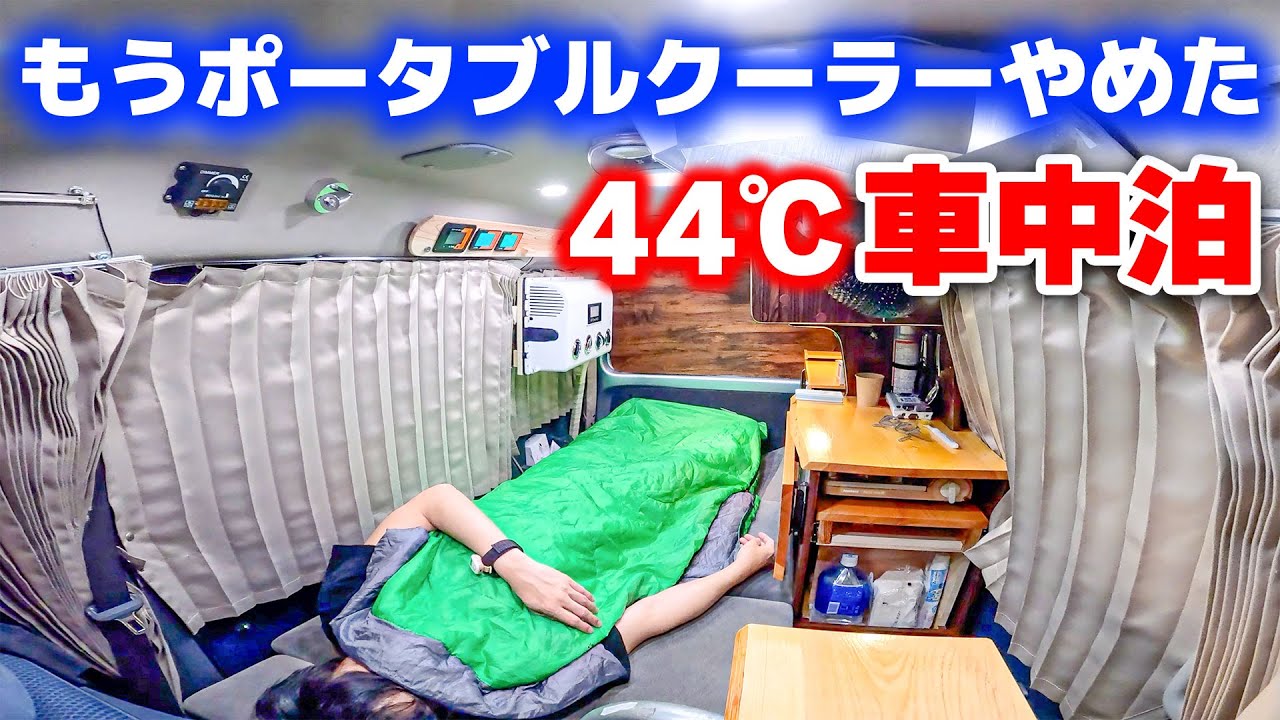
DIYで断熱した軽キャンピングカー今までポータブルクーラーラクールを設置していましたが、手間と冷房能力を考えて12Vクーラー導入しました。さっそく40℃越えの車中泊で冷えるのか、騒音はどうなのか検証してきました。
この動画は字幕ボタン・CCボタンを押すと横文字フルテロップでお楽しみいただけます。
Tap the CC button.Translated subtitles are displayed.
◆チャンネル登録
https://www.youtube.com/channel/UC9s5obQcNlZzuBTKqmRqHag?sub_confirmation=1
◆メンバーシップ
https://www.youtube.com/channel/UC9s5obQcNlZzuBTKqmRqHag/join
月一回のライブ配信、限定動画など。クピ男クピ子と交流していただければ嬉しいです!
X、instagramで撮影の裏側や日常を投稿しております。気軽にフォローよろしくお願いします!
・instagram
https://www.instagram.com/kupiochannel/
・今回使った車中泊アイテムは概要欄の一番下にございます。
◆おすすめ動画
◆おすすめ再生リスト
・車中泊動画
・レビュー車中泊シリーズ
・キャンピングカー車両紹介
◆サブチャンネル「クピ男家の日常」
主に家族での動画を投稿しております
https://bit.ly/2JmeRmm
◆今回使ったアイテム※amazonアフィリエイトリンクを使用させていただいております。
「メルテック 遮光マジカルシェード」https://amzn.to/4l7ImrA
「ペットボトルじょうご」https://amzn.to/4dsJHWG
「ソーラーパネル」https://www.solar-off.com/
「マグネットシート」https://amzn.to/3ZAv7Xt
「ダクトフランジ」https://amzn.to/43JDDG4
「アルミシート」https://amzn.to/4mzZN5i
「アメージングGT シートカバー」https://amzn.to/4jp75Xj
◆プロフィール
富山県に移住した車中泊、キャンピングカーが大好きなおっさんです。
車中泊動画がメインのチャンネルになります。
◆お問い合わせはこちら
kupichannel@yahoo.co.jp
◆使用音楽
DOVA-SYNDROME
youtubeオーディオライブラリ
MotionElements
楽曲提供 K-musica http://www.k-musica.com/
※動画により使っていないサイトもございます
◆動画チャプター
00:00 オープニング
01:11 ビルダーさんへ相談
03:10 富山帰還
04:34 車中泊出発
05:30 ローカルスーパー到着
06:42 12Vクーラーにして変わったこと
09:24 再出発
09:52 温泉
12:15 車中泊スポット到着
12:55 車中泊セッティング
15:22 12Vクーラー使用
25:05 ベッド展開
28:17 おやすみなさい
28:33 翌朝
29:13 一晩12Vクーラーを使ってみて
30:26 オフグリッドに挑戦
32:19 目覚めのコーヒー
33:09 海辺をお散歩
35:43 再出発
36:46 最後の検証
42:20 12Vクーラー3時間使用後
44:22 ポータブルクーラーから12Vクーラーの変えて感じたこと
46:22 JP STARで取り付け可能?
47:18 洗車
#car camping,#car camp,#camping,#vanlife,#japanese camping car
Hello! My name is “Kupio.” This is my light-duty camper van. I’ve been sleeping in it with a portable air conditioner called “La Cool.” Considering the hassle of installation, I’m considering a more advanced 12V air conditioner. I’m considering mounting it on top or on the side. However, there are some drawbacks to 12V air conditioners. They’re mounted underneath the vehicle, but in snowy regions, salt damage prevention is required. This is because the salt in the de-icing agent can cause rust. Furthermore, installing the outdoor unit requires metal processing, making it quite difficult for an amateur. I’ve looked into various installation methods and salt damage prevention, but I’m not getting anywhere. I’ll consult a professional. I’m currently visiting “JP STAR” in Aichi Prefecture to photograph a new camper van, so I’ll consult them. “JP STAR” was the first builder in Japan to install a 12V air conditioner. They are experts on 12V air conditioners. I’m planning to have them check whether it’s possible to install it on my light-duty camper van and whether there’s enough space underneath, and get their advice. They immediately raised the vehicle on a lift and checked whether there was enough space underneath. They explained each part of the 12V cooler to me. It seems there’s space to install the outdoor unit. They also said that JP STAR will handle the installation. I got a quote and decided to have them install it. Although I didn’t purchase my car from JP STAR, I’m grateful for their excellent service. I left my Micro Vacanches there for a while for a shoot. They told me that the 12V cooler had already been installed. Let’s take a look. It’s installed! It’s amazing. It’s lovely. It’s thin, so it doesn’t get in the way. The piping was routed to the back. It’s underneath here. They routed it behind the sofa and attached it to the outside of the car. The furniture was secured like this. They added some wood and secured it in place. There’s still a lot of tidying up to do, so I’ll shoot a video later. Since I have a lot of filming equipment in the car, I’ll go back to the garage in Toyama Prefecture and then go try out the 12V cooler for a night’s sleep. I’m so excited, I feel like a kid. I’m back in Toyama Prefecture. It’s so hot. It’s been hot all week, with a whopping 38°C today. Tomorrow’s temperature is 36°C. It’s time to put the 12V cooler I installed to good use. I’ve put a lot of insulation into this minivan. First, the ceiling. Then I filled in wherever I could on the sides. I also filled in any remaining space in the floor. This temperature is perfect to see how long a 12V cooler will last in an insulated minivan conversion, and whether it will cool even on such a scorching hot day. Many people use 12V coolers in larger van conversions, like the insulated Hiace. However, I don’t think there’s much data available on testing a 12V cooler in this insulated minivan. I’m looking forward to it. I think it will cool because the space is so small. However, since it’s a van conversion, it’s a lump of iron. I can’t even imagine it. In other words, I’m pushing the limits of a minivan. I hope it will cool. I’m looking forward to it. The sub-battery is a dual sub-battery system. This side is a 400Ah lithium battery. The other is a 200Ah lithium battery. For a total of 600Ah, The solar panel is equipped with a high-capacity 445W solar panel. I’m heading to a local supermarket in Toyama Prefecture. I’ll buy today’s ingredients. After buying fresh fish, I’ll head to the sea. I’ll take a dip in a hot spring with a spectacular ocean view, then spend the night in my car in a free parking lot along the coast. This is a surefire pattern. The 12V air conditioner is what allows me to do this, even in the summer. I was worried that the weight of the 12V air conditioner might make it a bit difficult to drive. I tried driving on regular roads for a while, and it seemed fine. I also tried driving on the highway from Nagoya to Toyama Prefecture. Nothing particularly unusual happened. This was a relief. I arrived at “Fresh Sabu.” This is a grocery store that a viewer recommended a long time ago. They have a lot of interesting ingredients. It’s a little pricey, but it’s a recommended local supermarket in Toyama Prefecture. I’ll store the empty plastic bottles I used previously here. I’ll also use them as drainage tanks. Everything fits here. As expected, being able to put food in the refrigerator from the back is very convenient. The refrigerator turned on. I set it to 5°C. As expected, using the 12V air conditioner made things much more convenient. The previous portable cooler was installed right around here. As expected, it was completely hidden from the rear. This refrigerator also became unreachable from the back. While it’s still light, I’ll take a look at the outdoor unit of the 12V cooler under the vehicle. It’s at the very back. Here’s the outdoor unit fan. And look at the front of it. It’s a little hard to see, but the compressor is attached inside the muffler. It’s separate from the fan. If you look from above, you’ll see the fan underneath here. Originally, there was a spare tire here. I had it removed. The fan was installed in that gap. The compressor is located around here. I think the fan and compressor are supposed to be integrated. Since there wasn’t much space, I had it disassembled and the fan and compressor were installed in separate locations. Installing this outdoor unit is difficult for an amateur. I can manage the wood inside, but the outdoor unit is made of steel, since it’s under the vehicle. I originally wanted to do it myself, but I gave up. The next time I have a chance to do some DIY on my car, I’ll try installing it. A while ago, I installed the outdoor unit of my “La Cool” portable air conditioner outside on this bike rack. However, it fell off. Since then, I’ve become afraid to install anything on the outside of my car with my own DIY project. It would be a nuisance to other vehicles if I were to ride on public roads. I’ll thoroughly study the outdoor unit of an air conditioner before looking for an opportunity to install one. This is the indoor unit. Here’s the pipe connected to the outdoor unit. It runs behind here. Here. They cut out the wood under the sofa like this and drilled a hole here to connect it to the underside of the car. This allowed me to install the 12V air conditioner without sacrificing much space. Thank you. In exchange, I was planning to fit a sofa mat here, but this pipe interferes with the edge of the sofa, so it won’t fit. So I moved it a little forward. The mat won’t fit. I have an extension mat. I’ll cut the wood myself later and sew this fabric together. Then it should fit. This level of modification isn’t that difficult, so I think I could do it myself. This morning, I bought a lot of fresh fish caught in Toyama Bay. I’m looking forward to tonight’s feast. About 15 minutes’ drive from here, there is a hot spring with a spectacular view of the ocean, so I’ll start by taking a bath. However, with a minicar, you can go anywhere, so it’s really easy. I arrived before dark. There is a train passing behind me. It’s a wonderful atmosphere. The ocean is to my side, but Toyama Bay is shining red in the setting sun. It’s very beautiful. There’s an observation deck in the parking lot overlooking the ocean. As expected, the open-air bath was spectacular. I could see Toyama Bay and the Tateyama mountain range beyond. The open-air bath and indoor bath aren’t very large, but there weren’t many people there, so it was comfortable. There’s a small space between the open-air bath and the ocean, and it was interesting that a train passed through there. There’s a fence blocking the view of the open-air bath from the train, so I could see the train from here. It was a very interesting structure. From here, there are many parking lots along the coast. I’m not sure if they’ll be open overnight, so I’ll go and check them out first, and then camp in a spot that looks like it might be suitable. There’s also a coin laundry in the parking lot. This is also perfect for a car camping trip. There’s a parking lot right next to the hot spring. The ocean is right in front of me. I’ll check it out. I can go in. There aren’t many streetlights, so it’s a bit scary. But there is one at the back. I’ll go there once. It’s great with the ocean right in front and the grass to the side. However, it seems to close after 9 p.m. This place is a no-go. It’s a nice place, so I’d like to come back here again at lunchtime. Let’s move on. This area was heavily affected by the earthquake, so the roads are bumpy. I proceed slowly and carefully. This looks like a good place. There are toilets and streetlights, so it’s bright. It’s bright, so it’s not scary at all. There’s only one other car parked here. It’s quite spacious, so I don’t think it will get in the way. The temperature is high, but the breeze coming from the ocean keeps you cool. The public toilets are also clean. Some people are jogging along the coast. I saw quite a few motorcycles earlier. It might become a hangout spot for biker gangs. So I’ll have non-alcoholic beer so I can be ready at any time. For now, I’m preparing to sleep in my car. I’ve been using this front shade a lot lately, and it fills in tightly, providing excellent insulation, and it’s very useful. It has a round wire inside. It folds up compactly when rolled up. It takes some getting used to, but the ability to fit snugly and tightly is a big plus. It’s very useful on very hot or very cold days. There’s no light leaking out at all. The exterior is made of silver, so it reflects sunlight. I made the side insulation shades myself, like this one. It’s an insulating material called metal sheet. I cut slits in it myself so it folds compactly. All you have to do is stretch it and stick it on. It was pretty easy to remove. I thought I made it large, but there were gaps. It kept falling over, so I created a mechanism. I stuck Velcro on this door. I also attached Velcro to this shade using leftover recycled sheeting. There was a bit of a gap on this side, so I bent a thin piece of steel and secured it with Velcro. This way, it won’t fall off. I also attached recycled sheeting to the insulation sheet at the very back of the car. I glued a small, strong magnet (available at 100 yen shops) to secure the insulation sheet to the rear window. This makes it easy to remove. It’s still temporary, but I’ll keep an eye on it for now. I didn’t make insulation sheeting for the side windows, so I’ll just leave it as curtains. The setup is complete. Now it’s time to turn on the 12V air conditioner. There was a remote control, but it had so many buttons I couldn’t figure it out, so I turned it on. I set the fan speed to “medium” and the temperature to “lowest” and watched what happened. The current outside temperature is 29.7°C. The inside temperature is 31°C. The lithium battery is 100% charged. I can use the air conditioner with just one button. It’s very comfortable. It’s been about 15 minutes since I turned on the 12V air conditioner. The inside of the car is quite cool. The temperature inside has dropped to 23.2°C. This is the thermometer I keep right in front of the air conditioner. The temperature is 19°C. The air conditioner is working quite well. Here’s how to operate it: Press this “M” to set each mode. The currently lit section controls the fan speed. You can change it with plus or minus. It was quite noisy at the lowest setting, so I’m currently setting it to the lowest. It’s still cool. There’s a snowflake icon. It seems you can change the mode, such as MAX or ECO. Changing the mode slightly changed the power consumption. For now, I’m using it with the snowflake icon in the center. I wasn’t sure how to set the temperature, so I set it to the lowest setting of 5°C. Normally, Japanese-made air conditioners can be set to 26°C or 23°C. However, since this is a Chinese-made air conditioner, the set temperature seems to be a little different. For now, I’ve set it to 5°C. The current power consumption is 40W. This includes lighting. When the set temperature is reached and the compressor is off, it consumes almost no power. Once the compressor starts, it currently consumes about 420W. With the lights unplugged, it consumes about 400W. The air conditioner is located at the back left of the rear, so I was worried about whether this side would be cool. The unit has four louvers to redirect the airflow. So I was able to adjust it myself, this way and that way. With all four facing this way, a fair amount of air comes in and it’s cool. So, this position was no problem at all. However, it is still very cold in front of the air conditioner. The driver’s side, which is farthest from the air conditioner, still doesn’t get any cool air. The temperature is down, so this side is cool without any problems. When it gets hotter tomorrow, it may be cool around here and hot on the driver’s side. I’ll try it again tomorrow. I’m glad to know that the air conditioner works. All I have to do now is relax overnight and see how much the battery drains, and whether it’s fully cooled by sunrise tomorrow morning. I’ll have a non-alcoholic beer to settle in. Car camping. The air conditioner and refrigerator are bothering me. This has become the ultimate lightweight camper. I could stay in this space for hours. The air conditioner noise, which I was concerned about, is actually quite quiet if I set it to “low” in eco mode. The outdoor unit makes a slight mechanical noise from below when the compressor is running. I’ve installed and tested this 12V air conditioner in various campers, so I’m familiar with its quirks. The loud outdoor unit is still bothering me. I think this air conditioner is probably quite noisy outside, too, but I’ll check it out anyway. I lower the temperature setting so the compressor keeps running. The lights are out and it’s pitch black. It’s a little scary. There are no streetlights on, even to the bathroom. It’s pitch black all around. Maybe they turn off the lights to stop biker gangs from hanging out? The area underneath the outdoor unit is wet with condensation. It’s not as noisy as I thought it would be, but I still heard the noise quite a bit. I’d be a little worried if it was a quiet roadside station. If the parking lot was crowded and there was a car next to me resting with the window open, I think I’d be quite careful. I’d really like to leave at least one parking space free like this. I’m a bit of a scaredy-cat. It’s so scary, I’m going inside. I love sleeping in my car, but I’m also a bit of a coward. Today, I bought a lot of fresh fish from the nearby ocean. Sweet shrimp from Shinminato and red sea bream from Himi. I still have more. I made simmered clams, marinated horse mackerel, and roast beef. Fresh Sabu had so much fresh fish, I couldn’t resist. I didn’t want to spill the broth, so I disposed of it using a plastic bottle drainage system. This isn’t finished yet. I bought a large piece of dried fish that was 50% off. I lightly seared it in a frying pan. I ‘ll ventilate the pan before lightly grilling the fish. It’s finished. This is my uncle’s air conditioner installation celebration set. Today, I splurged to celebrate the long-awaited installation of a 12V air conditioner. I wonder if I can eat this much? I brought soy sauce, so I’ll start with the sashimi. It’s a delicious seafood dinner. I’m going to enjoy it to the fullest today. Thank you for the meal. I ate it all surprisingly well. I can’t move. I put plastic wrap on the plates and aluminum foil on the frying pan, so I don’t think I’ll have to wash any dishes. It’s been about four and a half hours since I turned on the 12V air conditioner. The battery is currently at 77%. Tonight’s minimum temperature is 27°C. It’s a tropical night. I’ll check how much battery is left when I wake up in the morning. Even if this battery is already near 0%, I have another 200Ah sub-battery, so I think I can stay in the car for a while. The super-large 600Ah sub-battery isn’t often used in a kei car, but it drains quickly when I use the air conditioner in summer. You can never have too much battery in summer. All the streetlights around here are out, which is a bit scary, so I’m going to go to bed early. I’ll get to bed before I need to go to the bathroom. Now I’ll change into my pajamas, unfold the bed, and get ready for bed. This rear extension mat should fit here. In this case, the air conditioner pipe is sticking out, so the original mat is sticking out, so I can’t install it. So I’ll leave it here. Since there’s no rear extension mat, my legroom is a bit cramped, but this side is quite spacious, so I don’t think it’s a problem. Before I go to sleep, I read the campervan magazine from the “Car Travel Club” that was delivered to my house. There’s something called the “Japan Campervan Rally,” which looks pretty interesting. Many campers visit checkpoints and aim for the finish line. It lasts a month, and it seems to travel to various places . Finding a camping spot or a scenic spot on your own is fun, but traveling along a course like this also seems interesting. I’d like to participate someday. It’s a tropical night, but the inside of the car is quite cool, so it feels great. I think I’ll be able to sleep soundly. The style of a campervan can change dramatically depending on the equipment. One thing that’s often mentioned is the toilet. Installing one in your campervan makes even places without public restrooms a good place to sleep. It expands your travel options, and it really elevates your campervan life. In the same way, switching from a portable air conditioner to a 12V air conditioner really ups the comfort level. The ability to use it with just one switch, without any setup, is a big plus. What’s more, the compact size of a minivan keeps it cool. Even in summer, you can enjoy camping without having to go to high altitudes, making campervans enjoyable year-round. Recently, Japan has become a tropical region, with hot summers continuing every year. The climate has completely changed. Just like a house without air conditioning, a campervan without air conditioning is impossible to stay comfortable in during the Japanese summer. The 12V air conditioner I installed this time is a traditional type that has become cheaper. It’s now cheaper than portable air conditioners, so I recommend a 12V air conditioner for those who don’t mind drilling holes in the body of the vehicle. However, portable air conditioners also have a romantic feel to them, and I want to try them out. The trial-and-error DIY experience is fun. But in the end, a household air conditioner is the best for campervans. However, for vehicles with limited space like a cab-over camper, this 12V air conditioner is currently the best. The issues are battery consumption and whether it will cool a minivan even in daytime temperatures exceeding 35°C. We’ll find out tomorrow. Well, good night. I slept soundly thanks to the air conditioner. For now, I’ll switch back to sofa mode and get ready. Good morning. The air conditioner is on full blast. The interior is nicely chilled. The sub-battery is at 52%. It’s currently using about 250W of power. It’s been on for about 10 hours, so it’s down about 50%. The temperature in front of the air conditioner is currently 22.2° C. The thermometer near the ceiling is 24.4°C . The outside temperature is 38.3°C. The sun is shining from this side right now. The thermometer is located on this side . The sun is shining on it, so the temperature may be rising. There’s also a thermometer on this side. It’s 36.7°C. The thermometer on this side is located under the roof rack on the other side, so it’s currently in the shade. This is the actual outside temperature. Even though the sun is shining directly on this side, it’s still warm. However, thanks to the insulating shade, the temperature inside the car is kept significantly lower. This front shade also works quite well. This light camper has a large-capacity 445W solar panel installed on the roof rack. Currently, the sub-battery used for this air conditioner is not being charged by solar power. It seems to have 52% remaining when it’s turned off. I’m currently inputting solar power into the other sub-battery. The solar input is about 285W. So, if I were to transfer this solar input to the battery in the air conditioner, it would likely cancel each other out, allowing me to use the DC12V air conditioner off-grid. I’ll give it a try. I switch it using the switch under the sofa. Now the solar panel is input to the main battery on this side. I just stopped the air conditioner for a moment to switch batteries. It got hot in an instant. Currently, about 50W is being input. With this DC12V air conditioner and the lights on, the solar panel generated more power. This is amazing. However, the outside temperature is about to rise. As this happens, the air conditioner’s power consumption will increase, and the battery will gradually drain. This is amazing. It’s rare to find a lightweight camper that can also use a DC12V air conditioner off-grid. By combining full insulation, this compact, state-of-the-art air conditioner, and the latest high-capacity solar panels, we were able to reduce power consumption to this extent. I installed shades and curtains to further enhance the insulation. I did the same on the front side. Now I’ve closed the 360-degree curtains. It’s getting hotter outside, so the inside of the car is also getting hot. I’ll turn up the airflow a little. I’ll have a cup of coffee to wake me up. The refrigerator is small, but it has a 12L capacity, so I can store a 350ml PET bottle upright. Normally, it would be too hot to stay in the car. But now , I’m staying comfortably cool inside. And there’s no need to pack up. I can turn it off with a flick of a switch and get going. Once this air conditioner test is over, I might even consider a summer island hopping trip somewhere far away. Now, I need to go to the bathroom, so I head outside. Since we’re by the sea, I’ll take a short walk. I’ll leave the air conditioner on, but set the airflow to “medium.” It’s incredibly hot. But the view is spectacular. I found a covered area, so I cooled off under it. It’s quite cool in the shade. This is amazing. I’d love to have something like this in my backyard. Since it’s so close to the ocean, the sea breeze is really cool. Gazing at the blue ocean and sky, time passes slowly. It’s so relaxing. And these clouds make me feel like it’s summer. Large cumulonimbus clouds are forming one after another. It looks like it’s going to rain in the evening. The sun will rise more and more, and the heat will peak around noon. It’s the perfect place to test the heat. However, sometimes the sea breeze blows and it’s cool. This time, I’ll test it at a park in town, where the temperature will rise even more. There, I’ll turn on the air conditioner and eat my breakfast and lunch while testing. It’s cool. I’ll turn off the air conditioner for now. I’ll also put away the shade and curtains. It’s very hot. It seems the insulating shade worked well. This weather app, “Windy,” shows you hot areas across Japan. It’s currently 34°C in Toyama City, Toyama Prefecture. It’s 34°C in Tonami City. As expected, it’s hotter on the plains. Looking at Osaka Prefecture, it’s a whopping 36°C. What about the Kanto region? It’s staggering. Saitama Prefecture is 37°C. Even Obihiro City, Hokkaido, is 37°C. Is this even possible? I’m heading to Tonami City in the plains of Toyama Prefecture. This area seems to be the hottest. So, I’ll set off again, driving safely, in search of even hotter spots. It’s a beautiful day for a drive. The blue sky feels so good. Looking at this sky brightens my mood. The car’s air conditioning doesn’t work at all when idling. It cools down as the engine speed increases. I also have the engine charging on. The solar panel is 445W and the charging from driving is about 400W. I think the total input is about 700W. I’ll check later. I’ve arrived at the parking lot. I can exit onto the riverbed. I think it’ll probably be warmer in this asphalt parking lot. So, let’s do one final test. The sun is almost directly overhead. I closed the front shade. With the engine running, I’ll see how many watts are being charged in this state, combined with the solar panel and the engine’s alternator. The refrigerator and lights are currently off, and the alternator is charging on and off. It’s currently charging at 370W when not charging. When the alternator is running, it’s charging at about 760W. This is because the car’s alternator is standard and doesn’t provide enough power. When the main battery’s power gets low, the car cuts off charging while driving. So, it’s fluctuating between 350W and 750W like this. Replacing it with a high-output alternator is essential for continuous charging while driving. Now, with the car’s engine off, I’ll switch to this DC 12V cooler. There’s this AT, and pressing it changes the temperature setting like a regular home air conditioner. I think the compressor shuts off and adjusts automatically once the room temperature reaches the desired level. It’s probably pretty hot outside, so I’ll set it to the strongest setting. I’ll start with a strong airflow and then reduce it once the interior cools down. I’ll close all the curtains to increase insulation. So, I’ve done everything I can for now. The ceiling isn’t hot at all thanks to the insulation and solar panels. It’s noisy at the strongest setting, so I’ll turn it down a bit. I’ve run the air conditioner for about 15 minutes, and now the thermometer on the table is 22.6°C. It’s 26°C near the ceiling. I can definitely feel a slight heat around here. The heat is definitely coming through the glass. The temperature outside is over 40°C. The thermometer on this side is under the roof rack. It’s already over 40°C, at 40.1°C. It’s very hot. But with the cooler set to the lowest temperature and maximum airflow, it’s quite cool. I’ve now lowered the airflow to “medium” to see how long it can maintain its coolness. For now, I’ll keep cooking and see how it goes. When I turn on the range hood, outside air comes in, so I’ll test whether it will cool the car properly. I’ll make a Japanese meal by grilling the fresh fish I bought at “Fresh Sabu” yesterday. It’s Spanish mackerel from Himi Port. I sprinkle salt on it and grill it in a frying pan. I’ll also have natto and a type of kamaboko called “haben.” I’ll heat the rice in the microwave. Using the microwave and air conditioner simultaneously will consume 1200 to 1300W. I’ll only season the Spanish mackerel with salt. Since I’ll be grilling raw fish, I’ll take careful precautions against odors. To enhance the flavor, I’ll drain it thoroughly before adding salt. I’ll make water for the miso soup in an electric kettle. As expected, I’ll use “asage” miso soup. It’s finished. A salt-grilled Spanish mackerel and natto set meal. Let’s eat. Thank you for the meal. Spanish mackerel is delicious. The skin is crispy and the inside is plump. Fresh fish is delicious even when grilled. The oil splash guard has become essential when grilling fish, as it allows me to quickly wipe away the source of the odor. I noticed something while cooking with the air conditioner on during this hot day. When I use this range hood, outside air is drawn in, causing the temperature around here to rise rapidly. The thermometer near the ceiling rose to about 30°C. Now it’s down to 25°C. It’s annoying that the cooling effect is weakened, but it’s also annoying that odors are trapped inside the car. It’s quite a hassle. Outside air is drawn in from here and sucked in here. This is the only flow, but even that alone raises the temperature inside the car when it’s this hot outside. However, if the air intake was through a window on this side, the entire air would be replaced even more. Perhaps this range hood system kept the temperature rise to a minimum. It’s quite hot outside now, so I’ll relax in the car a little longer. I’ll check the battery to see how long I can use the 12V air conditioner during the day and see how much it drains. I’ll take a nap in the car for a while. It was cool and comfortable, and I had a nice nap. After three hours of use, the battery dropped from 62% to 37%. Current power consumption is 255W. That’s a 25% drop in three hours. Thanks to the solar panel, the air conditioning remains cool enough even during the day, even at high settings, and I found it can be used for a fairly long time. The hottest temperature reached during this trip was 44°C. This was the perfect temperature and season for testing the air conditioner. To summarize the results: Even on a scorching summer day with temperatures over 35°C and direct sunlight, the insulated van kept the temperature down. Power consumption was around 250W to 700W. With a 400Ah sub-battery, it consumed 48% overnight. For a two-day, one-night stay, a 200Ah capacity would be required. And with this 445W ultra-high-capacity solar panel, three hours of daytime use resulted in 25% consumption. So, after six hours, you’ll need 200Ah (50%). These results are for this insulated van; a standard version would likely require more power. Or, it may not even cool down at all. If you only use it at night, you don’t need insulation. Power consumption seemed to increase dramatically when the outside temperature exceeded 35°C. Power consumption was reasonably low up to around 30°C. One thing to be careful of is daytime temperatures above 37°C. The car cooled even in direct sunlight, but the maximum airflow makes it quite noisy inside. However, once it’s cooled, it can be maintained for a certain period even when the airflow is reduced to “medium.” Using a ventilation fan or range hood can quickly raise the temperature. I was using the portable “La Cool” air conditioner, but I recently switched to this 12V air conditioner. I’ll share the pros and cons I discovered after switching from a portable air conditioner to a 12V air conditioner. First of all, the biggest advantage is that there’s no need to set it up; just press this button to cool. That’s all there is to it. With the “La Cool,” the indoor and outdoor units are connected like a duct. They connect the inside and outside through a door. As expected, there are some gaps. In the summer, there’s a chance that small mosquitoes could get in through those gaps. And they did. This might be fine in the city, but if you’re traveling to the countryside, the gap might be a bit of a concern. It’s not a problem if you spray insect repellent inside the car. Since I use the 12V cooler with the doors completely closed, there’s no need to worry. It’s also convenient that it can be opened from the back. You can also access luggage here. This is just me, but I used to have a portable cooler installed here. The back was difficult to open due to wiring ducts and other issues. I carved out this area and modified the body of the car to route the wiring for the La Cool portable cooler, so it’s a bit of a shame. I’ll try using it with the rubber cover on for a while. I think this will probably close the gap. On the other hand, the outdoor unit is installed underneath the car, so I’m concerned about calcium chloride. There are fans and compressors underneath. With a portable cooler, you can either keep it inside the car or remove it from the car when you’re not using it. This is unavoidable, but it’s a disadvantage. Portable coolers are removable and can be used in any car. Even if you decide to sleep in a different car today, you can just load it in the same car, making it easy to go. It’s impossible to easily replace a 12V cooler. The last thing I was concerned about was the wind direction. If you set it up like this, the wind will just flow over you, so it’s difficult to get the wind to the side. Portable coolers, on the other hand, can be moved anywhere you like. So you can get some fresh air like this. These are the things I noticed when switching from a portable cooler to a 12V cooler. I consulted with JP STAR, a company I always use, and had them install it. I asked JP STAR if they could install it in a viewer’s car, and they told me to give them a call. It may be difficult for cars without installation examples. Also, they may not be able to accommodate orders for JP STAR campers when they’re busy. But if you’re interested, give them a call. I think their prices are cheaper than other air conditioner installation companies. While they usually only install air conditioners in cars purchased by builders, they’re also happy to provide consultations on private vehicles. If they’re OK with the installation, consider yourself lucky and ask. They might be able to help. It’s likely the cheapest option compared to taking the long route with a portable cooler like me. However, since it doesn’t run on a portable battery, I think a lithium battery is essential. For those who plan to sleep in their car in the summer, a 12V air conditioner is a good option. Finally, I’ll try taking it through a car wash. There’s an undercarriage wash option with an outdoor unit, so I’ll try that too. This new 445W solar panel is lightweight, but the surface is uneven. Will it be okay to run it through a car wash? There are wires underneath the solar panel. I’m concerned about whether it will be okay if it gets wet. The installation is caulked, so I think it should be fine. I’ll try it at my own risk. If I add the optional roof rack, I don’t think the car wash will hit the top. It’s a new car wash, so I think it should be okay, but I’ll try it out. I’ll have a shampoo wash. I’ll choose the undercarriage wash and wheel wash. I’ll choose the carrier as my equipment. That’s 600 yen. I’m confirmed. It should be okay since there’s no roof wash, but I’m a little worried. They also washed the wheels. They also washed the sides with this brush-like thing. It looks like it will be clean. I don’t think it hits the ceiling, judging by the way it feels. The car wash finished without any issues. It looks fine. None of the solar panels have come off. There doesn’t seem to be any damage on top of that, so I think it’s probably fine. The air conditioner’s outdoor unit, fan, and compressor are wet. I don’t think there’s a problem, but I’ll take it for a test drive later. I’ll wipe them down. I wiped them down. I think they’ll dry as I drive. I checked the air conditioner’s operation after returning to the garage. There were no problems. I’m also thinking of making a DIY cover for the outdoor unit.
冬季に塩化カルシウムなどに備えるためのカバーを設置したりできますか?冬の準備のための方案があるはずです。
下部室外機だと塩カルもなんですが、石や轍の固まった雪などで損傷しないかが不安ですね、背面取付のものやルーフ取付のものがあれば良いのですが・・・。
12:50 「暴走族の溜まり場に・・・」
確かに富山は暴走族発祥の県ですが最近は完全に絶滅危惧種化しましたよ。
後でコンプレッサーやコンデンサー等を独立して付ける場合、付けるのはそうでもないんだけど、最後の真空引きとガス入れがあるんですよね。それさへ勉強すれば、自身で色々付けてるクピ男さんなら付けられると思いますよ😊
夕日🌇きれいですねひとりの車中泊♨️🚙も清潔感とてもいい羨ましい😮
やはり落ち着いたクーラーのスタイル✨JPSTAR様の施工は有難く✨…元々大容量バッテリー装備&大出力ソーラー入力で遂に、クーラー稼働オフグリッド✨こんなん見た事無い…
車中調理も美味そうで、一人旅には
…夢の軽バンコンが完成✨🎉素晴らしいです✨
今回のような災害級の集中豪雨の実証実験があるととても参考になると思います。
塩カル対策は、コンデンサーはアルミっぽいのでワックススプレー等で良いと思います。コンプレッサーはチッピングスプレー等を使えば良いと思うんですが、問題はコンデンサーもコンプレッサーも冷やさなければ駄目だって事。下手な対策をすると、コンデンサーが冷えなくなってクーラーが冷えなくなってしまい、コンプレッサーは熱を持ちすぎると直ぐにぶっ壊れてしまうこと。その辺りはどの様に対策するかをそれこそjPスターさん等プロに相談する事をお勧めします。
クピ男さん、こんばんは!
12Vクーラーの効きは相当なものですね!以前に12Vクーラーを他の業者さんで聞いた際は希望の位置だと施工代も入れて40万円以上はかかると言われて、ラ・クールに行き着いた経緯がありました😫
ラ・クールだと夜限定になりますが、12Vクーラーだとお昼間でも効果あるのは凄いですね。
リチウムも大容量だと夜間10時間稼働させても50%しか減らないのも驚きました!
ソーラーパネルと車体の間に隙間があるって、ダブルの熱対策として大事ですよね。
屋根にベッタリ貼るのって裏面の放熱や屋根に熱が伝わるし、初による発電効率も低下と宜しくないです。
スペアタイヤ外しちゃってるのでパンク修理キット積まないとですね。動画内ではそのことについて触れてなかったので少し心残りです。しかし、これで外部給電ユニットつければ夏場は最強になりそう
先日地元のI市が気温41℃になりました
車内で冷房つけてれば大丈夫だとは思いますが、熱中症には気をつけてください
室内機の場所、結局そこなんですね、、、
クピ男さんプロデュースのキャンピングカー、魅力度高そうです。
Would it help with insulation if you painted your van white, or a more metallic / reflective shade of grey?
Also, applying IR-rejecting film with high TSER on the inside of all your windows?
お疲れ様です ~🙇♀️‼️北海道は涼しいはもはや神話になってますよ‼️温暖化が進み6月末から徐々に気温差は激しいですけど、朝晩と日中が本当極端です😮💨‼️
別のクーラー付けたら、車内がすっきりした様な感じがします!やっぱり、車内に付けるなら、この様に付けた方がいいですね!
最近の主流はコンップレッサーと本体室外機とバラしてから設置するんですねぇ、だからN-VANの4WDでも12V クーラー付けられるようになったのかぁ、、、、
もはやそのクーラーが我が家の室内にほしい😅
ここのコメントをみるだけで勉強になります。
クピ男さん、12vクーラーの吹き出した先に自分に向けて風が来る様に湾曲した反射板を付けてみては如何でしょうか?
いつも拝見してます。
ほんまに今日の晩ごはんやばいですね。しかも新品のエアコンの中最高ですね。
あとくぴ男さんはビビりでないです。こんなに暗い所誰でもそうなります。
株の田端信太郎さんが自身のYouTubeで、クピ男のYouTubeを観てると豪語されてましたよ!「ガツガツしてない草食男の車中泊動画で、なんでいつもノンアルコールビールしか飲まないんだよ!本当のビール飲めよ!」と仰ってましたよ❤(笑)
夢がふくらむ軽キャン、商品化待ち遠しいです😁
ちょっと気になったのですが、嫁のNVANはクピ子さんにお返ししたのでしょうか??こちらの車を買われたので登場してなくて気になりました😊赤いN VANかわいいですよね❤元に戻してクピ子さんとクピ美ちゃんが乗ってるのかなー?😊
絶対、日本酒欲しくなる夕食メニュー 私なら我慢できません。🤣
最も厳しいと思われる条件下で12Vクーラーしっかり働きましたね。ラクールも走行中は室外機を中にいれて、目的地に着いたら外に設置する方式でもいけると思います。手間ですが。
こんな車いいなぁ、今暑いので車中泊は 我慢してます 夫婦二人旅になるので 次の旅先を考えてます 。お隣の富山にはよく行きます😊
スライドレールおじさん!
A suggestion is that when you use the ac when its hot inside the van is to open a window slightly as to give the hot air a place to escape thereby taking some of the load off the ac. Plus about your fridge you might want to have it turned on before hand to cool it before you put something that easily spoils in high heat like sashimi or seafood inside so the inside has a chance to cool down and keep the food chill. Especially on days with heat advisories. I live in Florida USA and during a heat advisory if you don’t put your seafood in something pre-cooled quickly or an air sealing insulated bag, no matter how air tight the food packaging is, prepare for your immediate area to start smelling strongly of fish.
12Vクーラーつけると軽キャンピングカーが至高の車になりましたね。
クピ男さん、こんにちは✨
12Vクーラー、興味津々です!私も先日、WAVE2持参で車中泊に行き、車内破壊してしまいましたw😇クーラーの取り付けは、いくらぐらいするんだろ?バッテリーから必要ですよね🥺宝くじ、買おう!w🤗クーラーもビールも、冷えてやがるにはww😂
毎週、たのしみに拝見しています。ほんまにビール好きですね。100万円の軽にかなりお金かけていますね。yuutuberとしては、視聴者に飽きないように派手になりすぎているのが気になります。どうせなら、長期の旅に行くというのはどうでしょうか、好きな趣味などがあれば紹介してください。
スペアタイヤを下すと山の中でパンクをした時の不安が付き纏いますが。
車内(助手席辺り)に予備タイヤ積めるといいんですが、ロードサービスを呼ぶしかないかな?
JAF会員になるとパンク時にタイヤを無料で貸してくれるサービスがあります