



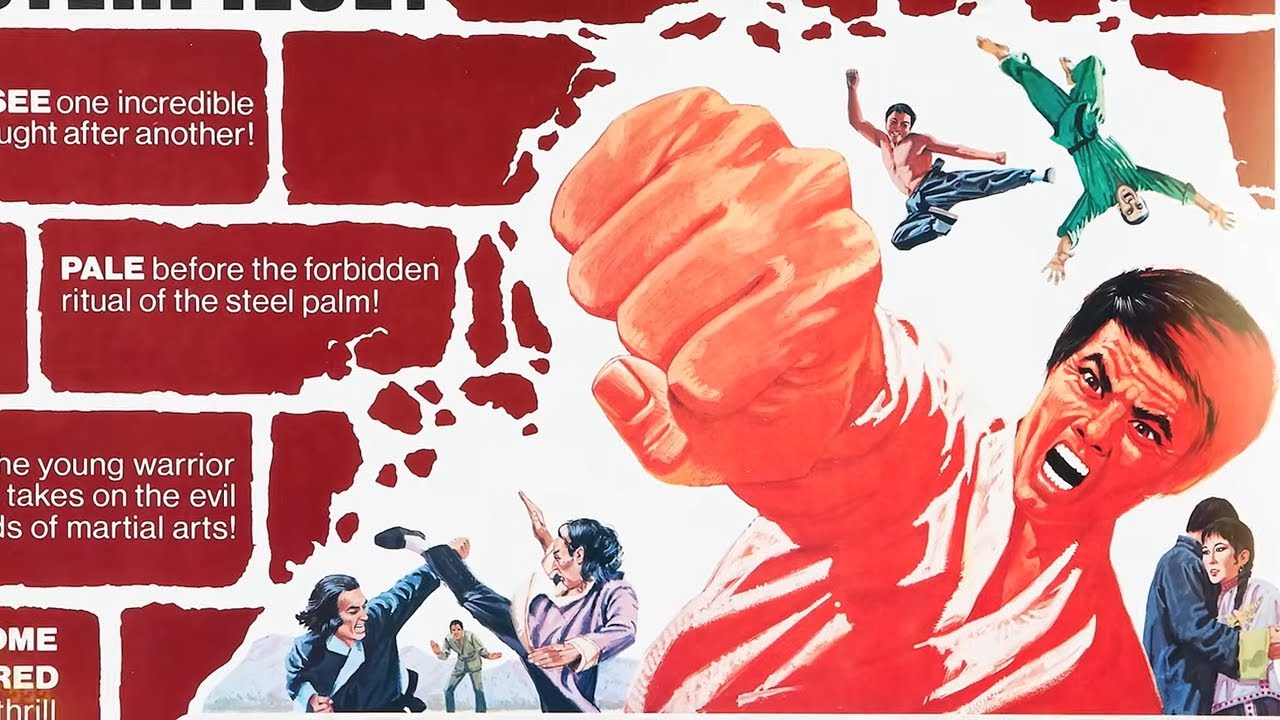
From Chinatown theaters showcasing Shaw Brothers films to the worldwide rise of martial arts cinema, the genre’s popularity soared. “The Kings Of Kung Fu” unveils the untold stories of legendary stars, exploring the golden age of Hong Kong action films and the lives, struggles, and triumphs of the icons who brought kung fu to the big screen.
With rare interviews, behind-the-scenes footage, and expert commentary, this documentary is a must-watch for fans of Bruce Lee, Jackie Chan, Sammo Hung, and the countless warriors who shaped cinematic history.
Whether you’re a lifelong kung fu enthusiast or just discovering the magic of martial arts movies, “The Kings Of Kung Fu” will transport you into a world of action, honor, and legendary heroes.
Directed by Daniel Griffith
00:00 Full Documentary – Chris Poggiali narrates the history of the first decades of Kung Fu distribution in the USA.
03:42 Bruce Lee inspires a new generation of martial artists with his groundbreaking philosophy.
07:18 Jackie Chan overcomes early setbacks and reinvents kung fu comedy on screen.
10:55 Sammo Hung unites his friends to challenge the limits of martial arts choreography.
14:23 Angela Mao breaks barriers as she becomes the first female kung fu superstar.
17:59 Gordon Liu faces betrayal and rises to claim his place among the legends.
22:13 Yuen Biao dazzles audiences with gravity-defying stunts and fearless determination.
25:30 The legends join forces, transforming kung fu cinema and leaving a lasting legacy.
Don’t forget to like, comment, and subscribe for more classic cinema and martial arts content!
https://www.youtube.com/playlist?list=PL2gsu7VGzgdatMxbjVFrbl6QrPEvFjhBb
#KungFu #MartialArts #Documentary #BruceLee #JackieChan #CultCinema #ActionMovies
– [Chris] I first was exposed to kung fu movies on television with the Black Belt
Theater packages. The first one I saw
was in early 1982, 10 Tigers of Kwangtung, which
is a Shaw Brothers movie. (exciting music) First in the ’60s,
these movies ran in the Chinatown theaters,
and then the theaters that ran Japanese movies
would show the samurai films and the Chinatown theaters
would run the Shaw Brothers and the other companies
that did the Wu Xia and, you know, the
Sword Play movies, though, they were really
confined to Chinatown theaters, but they would advertise in
San Francisco and Los Angeles. If there was a big movie
playing, always, like the Village Voice
would advertise the
theaters in Chinatown. If there was a big movie that
was making a lot of money in Hong Kong and
throughout the Orient, like One Armed
Swordsman, I mean, The One Armed Swordsman,
when it played in Chinatown, it was advertised
in the Daily News. And so people would go
see it, interested parties and audiences of all kinds,
you know, White, Black, Hispanic, Asian, they
would go see these movies in Chinatown theaters and then
same with the Japanese films, the samurai movies
that were playing in the Films of Japan series. That’s how they
came about, really. I mean, the Shaw Brothers
really started to push into the US market in 1962, ’63,
using Hawaii as the entryway. At the same time, Run
Run Shaw was getting some of their big costume dramas
into the Cannes Film Festival. Like The Magnificent Concubine
in 1962 was an award winner at the Cannes Film Festival. There was another one called
The Last Woman of Shang, which was the most
expensive Chinese film produced at that time, it
was a $4 million budget, had a cast of, like, 25,000. A theater owner named
Frank Lee, who owned the Bella Union Theater
in San Francisco, he started bringing over
the Shaw Brothers movies, and he became the first
US rep in continental US for the Shaw Brothers. Now, the idea was in Manhattan, there were four
theaters in Chinatown, and they ran only
Cantonese movies, which were for mass
Chinese audiences. The films were in the
Cantonese dialect, but what Frank Lee wanted to do with the Shaw Brothers films,
he figured there were about 30,000 people in the New York
area who understood Mandarin and would go see a
movie in Mandarin. And he also noticed
that there was this big art house audience in New York that were going to
see movies by Bergman and Fellini and Norman
Polanski, et cetera. So why not show these Shaw
Brothers movies in Mandarin in a Manhattan theater? And so that was his rationale. So he started
showing these things, and one of the films
he showed in 1966 was Come Drink with Me,
an early King Hu film, which is really his
breakthrough film. You know, he would later
become known for A Touch of Zen and Dragon Inn and
The Fate of Lee Kahn. But Come Drink With Me was
his Shaw Brothers film. And it was his
breakthrough film. And it was a sword play
movie, lots of action. (dramatic music) Frank Lee brought Come Drink
with Me to Los Angeles first in July 1966, San
Francisco in August ’66. I think he opened it
in New York in October at the 55th Street Playhouse. So this was really the
first martial arts movie to play outside of
Chinatown theaters. Madame Whitesnake was really
the first Chinese movie to play American
art houses in 1963. But three years later, Come
Drink With Me was the first martial arts movie
really to play in theaters outside
of Chinatown. This was the first attempt
to bring Shaw Brothers and Chinese movies in general
to a wider American audience. In fact, a couple of them
toured around the country. Frank Lee brought, I think,
Last Woman of Shang around to other cities like Kansas
City and maybe Cleveland. Once the movies started
playing in, you know, mainstream theaters they
were dubbed into English rather than subtitled. I mean, when Frank
Lee was showing those Shaw Brothers
movies in the ’60s, like Come Drink with Me,
they were in Mandarin with Cantonese and
English subtitles. So you had two
sets of subtitles. But in 1973, when Five
Fingers of Death came out, that was dubbed, like, you know, the Godzilla movies and
the Hercules movies. There was a dub track, an
English dub track to it that was done in Hong Kong. So that just became the
norm for martial arts movies outside of ethnic
theaters, let’s say. (exciting music) – [Announcer]
Karate and kung fu, the new screen excitement
you’ve been waiting for. (fighters exclaiming) – [Chris] Kung fu movies
really began to sweep the United States
in March of 1973 when The Five Fingers of Death was released by Warner Brothers. It was a Shaw
Brothers production originally titled King Boxer.
(triumphant music) Warner’s was deep in the
production of Enter the Dragon or what would be called
Enter the Dragon. And they wanted to test the
waters with a martial arts movie and they had acquired King
Boxer from the Shaw Brothers, and they wanted to put
it out just to see, like, what the
response would be. There was an employee
at Warner Brothers by the name of Wolf Cohen,
who had been with the studio since the 1930s and he
had started as, like, a manager of the Canadian branch
and had moved up the ranks as an international
sales manager. And so he pretty much knew
movie people all over the world. So he was still knocking
around, at age 73, Warner Brothers, as an
international salesman, as a rep for the Shaw Brothers. The movie was premiered at
the Loew’s State Theater in Times Square on Tuesday,
Tuesday evening, March 20th. It just blew the doors
off the theater. (laughs) Figuratively. It just
instantly got attention. And word of mouth spread quickly
to the point when the movie opened in Boston at the Savoy
Theater a couple weeks later, April 1st, a distributor by
the name of Serafim Karalexis went there to see it. He was based in Boston and he had never seen
anything like that. First of all, the movie
opened on a Sunday in Boston, which was something that
didn’t usually happen. So he went to see it and he
just, the audience response, it was a sold out show
on a Sunday night. So he said, “I don’t know
where this came from, but I have to get one
for myself to release.” So he saw at the end of the
movie that it was produced by the Shaw Brothers
in Hong Kong. So the next day he jumped
a plane, went to Hong Kong, not knowing like how to find
the Shaw Brothers or anything. And just got there and,
you know, asked around and called the Shaw
Brothers and said, you know, “My name’s Serafim
Karalexis, I’m a distributor from the United States, and
I wanna buy a kung fu movie.” So he ended up buying a
movie called The Duel, which he renamed
Duel of the Iron Fist because, you know,
Five Fingers of Death, there’s a lot of
talk about the fist. So he renamed his movie
Duel of the Iron Fist and got it into theaters
three weeks later, which is just incredible
to me, that somebody within three weeks would,
having never been to Hong Kong, hop a plane, go there, introduce
himself, and get a movie, get print ads, you know,
made up and everything. I mean, this was long before
there was the internet or faxing, you
know, it was faxing, but it was still,
it was quite a feat. And that was a big hit too. I mean, there were,
there were so many movies coming out at that time, then
you had the Bruce Lee movies that were picked up
by National General, the first one
being The Big Boss, which came out as Fists of Fury,
right around the same time. I think that was
premiered in Texas. I think El Paso and North
and South Carolina got it, like April 11th, so that
was technically the second martial arts movie to
come out in theaters. That was whatever,
10 days, 11 days before Sarafim got Duel
of the Iron Fist out. In fact, when Fists of
Fury opened in New York, it was the same day that
American International put out an Angela Mao
movie called Deep Thrust, which Golden Harvest produced. And Golden Harvest had
actually also produced The Fists of Fury,
so you had two movies from the same producers
opening the same day. And National General
decided to pick a fight with American International
over which movie was the actual more
authentic martial arts movie. And American International
ended up filing a lawsuit against National
General, you know, for claiming that their
movie was superior. It was a real martial
arts movie. It was
the same producers. I mean, who would do that? That’s how much of a craze
and how quickly it caught on. Some of these distributors
automatically assumed that audiences wouldn’t
really know what kung fu was, even though there was a
TV series on at the time, it had been on for several
months, called Kung Fu. So the advertising for some of
these movies at the beginning would hype it as kung fu
karate or karate kung fu, just to, because people were
more familiar with karate since it had been around longer. It was on television
throughout the ’60s. – We know everything.
We can prove nothing. We want you to go in
there as our agent. (exciting music) – [Announcer] His job is to
find the secret of the island of Hahn and destroy it.
(dog barking) – [Chris] And then Bruce Lee
passing away in July of 1973 a few weeks before the release
of his big breakthrough film, his big Hollywood
breakthrough film, which was Enter the Dragon. So you had a movie
that opened in August and the star was deceased. Bruce Lee had tried for so long
to become a star in the US. There was a feeling
among fans that just, like, “What happened,” right? Like, “We’re just
catching on to this guy, how great he is, what
a charismatic performer with a great screen
presence and he’s gone.” He became an international
star very quickly based on those two films that
he did for Golden Harvest. Golden Harvest was
started in 1970 by the talent that had left
Shaw Brothers the year before, Raymond Chow, and Jimmy Wong
Yu and a couple of other people who just jumped ship and
went over to Golden Harvest. They had some success. They had Angela Mau
and Jimmy Wong Yu. But really they didn’t take
off and become really popular until Bruce Lee did the
two movies with them. He was allowed to direct the third movie, The
Way of the Dragon. – [Announcer] What
could be more exciting than Bruce Lee in
Enter the Dragon? Bruce Lee in Return
of the Dragon. (dramatic music) Yes, Bruce Lee is back
blazing his way from Hong Kong to hell in the all new
fantastic adventures of the superhero he created
in Enter the Dragon. – [Chris] Another important
factor that happened in 1973 was in June of 1973 there was
the Supreme Court decisions regarding obscenity, the
definition of obscenity, whether it was a federal
issue or a local issue. And ultimately it was decided in June of ’73 that it
would be a local issue. Local jurisdictions
would be left to decide what was
obscene, what wasn’t. If you didn’t know what the
obscenity rules were in, you know, from one
town to the next, you’d end up going to prison
or were financially ruined with legal fees and
all sorts of issues. So you had companies
that were, just, like, overnight they changed, they
just dropped the distribution of adult films and switched
over to violence. (laughs) So things that were
playing in drive-ins also would start playing in
these action theaters. You had still had some
spaghetti westerns that were getting released,
but it was mostly, you know, 1973, ’74, ’75, it
was a lot of kung fu and a lot of
blaxploitation movies. Now, at the same time, the
kung fu movies were starting to dip in popularity
outside of the big cities. Like, even if you had
drive-ins that were, like, on the outskirts of
Detroit or Atlanta, they would have kung fu
movies that were popular. But, you know, you got
into more rural areas, the martial arts
movies after, you know, after maybe six months
or so, you know, by the end of 1973, they
just weren’t selling to rural audiences or,
you know, white audiences. They were not as popular
unless it was Bruce Lee. I mean, Bruce Lee was so
popular because there was such a cult that was already
growing by the end of 1973. You started to get actors
and actresses who were being billed as the next Bruce
Lee or the female Bruce Lee. Within a few months of
his death, he was already being exploited, as you
know, in this capacity. So those movies, anything
connected to Bruce Lee or featuring Bruce Lee,
continued to be popular. So these distributors
that had switched from adult movies
to action movies were trying to find some way
to tie in with Bruce Lee. Kung fu movies
were always popular with Black audiences,
with Hispanic audiences, obviously with Asian
audiences as well. Some distributors decided,
“Well, you know, if the audience is primarily African
American, what we need to do is introduce African
American martial artists.” And so that’s where
Ron van Clief came in as the Black Dragon. You know, Bruce Lee was
known as the dragon, you know, he was in
Enter the Dragon, he was born in the
year of the dragon. So he was known as
the little dragon. You know, we’ll
get Ron van Clief and we’ll put him in, we’ll
hype him as the black dragon. – [Announcer] After
the death of the dragon comes a New American superstar, 16 years in the martial arts,
seventh degree black belt, and four times World Champion. Introducing Ron van Clief
as the Black Dragon. – [Chris] Or Jim Kelly had been costar to Bruce Lee
in Enter the Dragon. “Let’s give him a
three picture deal,” or however many
pictures he did for Fred Weintraub and Paul
Heller at Warner Brothers. You know, that led
to Black Belt Jones. And then he also turned up in Golden Needles and
Read the Hard Way. Right about the time that
the distributors started to realize that the primary
audience for these films were African Americans,
they began to use announcers for their trailers
and their TV spots who were African American
voiceover artists. First, there was an actor
named Al Fann who used to take out ads in the trade
papers, trumpeting himself as the, quote, “Best Black
voice in New York,” unquote. So he did trailers for
movies like Queen Boxer and The Tongfather, and
some bigger studio films like Bucking The Preacher
and Comeback Charleston Blue, which he also appears
in as an actor. On his resume, he
actually listed himself as the official voice of Ex-Lax. (cheerful music) – [Al] Now an underworld power more murderous than the mafia,
more gory than The Godfather. The combined forces of
judo and kung fu karate explode across the
screen in The Tongfather. – [Chris] Because the box
office was dipping overall in the martial arts movies
that weren’t Bruce Lee, you could always re-release a Bruce Lee movie
and make money. Otherwise, they were
trying different things, like western, kung fu westerns or spaghetti western kung
fu movies or horror movies that were, you know, like
Seven Brothers Meet Dracula, which was a Hammer production. In 1974, New Line Cinema
put out The Street Fighter, which was a Japanese
production from Toei, Toei company in Japan,
starring Sonny Chiba, Shinichi Chiba was his name, but they sold him as Sonny
Chiba, and he was touted by Playboy Magazine as the
successor to Bruce Lee. (exciting music) – [Announcer] The
Street Fighter. – [Chris] So that
was another attempt to find the next Bruce Lee. And it was a big hit,
once they cut it for an R because it was so violent,
it got an X rating. New Line Cinema put it out
first with an X rating. There was a theater
chain, Loew’s, that would pretty
much show anything. Loew’s owned a lot of
the old movie palaces in downtowns around the country. Like throughout New York State, Buffalo had a Loew’s
theater downtown, or two Loew’s theaters
downtown, Syracuse had a Loew’s. So they had these big movie
palaces that were falling apart that were playing
blaxploitation movies and martial arts movies. And in some cases, like in
Buffalo, they were showing, one of the Loew’s
theaters was showing X-rated films, hardcore porn. So they would pretty
much show anything. They weren’t scared
off by the X rating on The Street Fighter, but to
get it into a wider release, New Line Cinema cut
it and, you know, once they cut it,
it was successful. (suspenseful music) – I’ve waited a long
time to settle the score. – Don’t be too impatient.
I’ll see you another time. (triumphant music) (fighters exclaiming) – [Chris] As the genre
progressed through the ’70s, attempts to become more wild, to present more
extremes in the genre, like a co-production
between the Shaw Brothers and a West German company
produced a movie called Virgins of the Seven Seas, which played in the
US as The Bod Squad. So you had this mix there
of sex and violence. You know, this, like, soft
core, it was almost like one of those School Girl
report movies from West Germany mixed with a Shaw
Brothers kung fu movie. Or Killer Snakes, which
was a horror movie produced by the Shaw Brothers, which was released in
the US with an X rating. Or Killers on Wheels, which
was like a biker movie crossed with an
action, you know, there’s a little bit of kung
fu in that, but that was a Shaw Brothers production
that played here in the States. So you had these different
and kind of outlandish attempts to do something
different with the genre. For example, the Shaw Brothers,
their second team of stars. I mean, they, they had,
you know, Jimmy Wong Yu and then they got David
Chang and Ting Lung and Fu Chang who were popular
in the first half of the ’70s and then they
introduced the Venoms, the Venom Mob, you know,
these five or six guys, movies like the Daredevils
and Masked Avengers. One of the films they put
out was Crippled Avengers, which was released here
by World North Hall as Mortal Combat,
that was the US title. But it was known in Hong
Kong as Crippled Avengers. And yeah, it’s about these
guys who are all, like, you know, handicapped in
some way by the villain. And, you know, whether
they were blind or deaf or their arms cut off. One of the characters is
like beaten over the head until he’s, you know, he’s
pretty much, you know, mentally handicapped, and
then they all fight back at the end and get revenge. That was kind of
the inspiration for a movie called The
Crippled Masters and starred these two
really handicapped actors, martial artists, Frankie
Shum and Jackie Conn were their names, their
English language names. One was Thalidomide,
had Thalidomide syndrome and then the other had no legs. So they did three
movies together in which they were the leads,
The Crippled Masters being the first one,
which was released in the US in 1982
by New Line Cinema. Second one, Two Crippled
Heroes, was made in 1980. And that played in the US under the title
Outcasts of Kung Fu. And that was actually
sold to television as Two Crippled Heroes so
that was one of the movies that you could see on TV. The third movie, Fighting
Life, I don’t think played in theaters here, but was
at least to home video by Master Arts video
as Fighting Life. Then they made one more movie, but they were supporting
characters in it called Raiders of the
Shaolin Temple, in May 1982. But that was it. They
only made the four movies. (light music) – [Announcer 2]
That experience had left them both
terribly mutilated. – [Chris] They’re exploitative, or at least the first two are. Crippled Masters is pretty
hard to watch. (laughs) Especially the setup for
it, where the two characters are maimed and just
mistreated by the villain. And then, you know, it’s the
standard martial arts story. They train and then they
fight back and get revenge and, you know, the wrongs
are righted at the end. I know somebody who
worked at New Line Cinema right after that movie came out. He started, I think, in
1983, and he said that that movie still played,
still got bookings as a second feature
and that the trailer was always arousing. (laughs) It always got the
audiences worked up. New Line was based in
New York and had been, you know, since they
first opened in 1967. Before they became known for
the Freddy Krueger movies and the Teenage Mutant
Ninja Turtle movies they were known for art movies. They had a history with
martial arts movies already when they acquired The
Crippled Masters in 1982. – I am the king
of the underworld. – Huh? The underworld. – If you continue to misbehave, I’d be delighted to send
you to hell forever. – [Chris] One of the
most extreme movies on the martial arts
scene to play theaters in the US on the action track
and also television later, was a movie called The
Dragon Lives Again. Which was a
Bruce-ploitation movie. And it’s the most outlandish of all the Bruce
exploitation movies. I mean, it opens with Bruce
Lee dead and in the underworld and you know, his corpse, it
looks like it has an erection, but it turns out no,
they’re his nun chucks. Because there was
a urban legend that since Bruce Lee died in
the bed of Betty Ting Pei, in her apartment, that, you
know, that he had an erection. Like one of those urban legends. I mean, there are many
urban legends that sprang up or rumors about, you
know, about Bruce Lee after he passed away
since, you know, he did die under
mysterious circumstances. So anytime something
like that happens there are rumors and
conspiracy theories and so on. So he’s in the underworld and he’s immediately,
like, comes in contact with all these guest stars like
James Bond and Clint Eastwood, who’s, you know, in his
Man with No, you know, but it’s not Clint Eastwood. It’s an Asian actor
playing Clint Eastwood and you have The Exorcist
and Emmanuel and Popeye and all these crazy
characters who are either teaming up with Bruce
Lee or are against him. (jaunty music) – You must announce
that you are dead. Your wife, your
children, your friend, and above all, your
work, that’s gone. You will live as a
recluse for 10 years. – [Announcer 3] Many believe
Bruce Lee is still alive, a recluse preparing
to return in 1983, 10 years from the day
of his disappearance. All new, all true.
His true story. Proving without a doubt
his famous statement, “To tell you the truth, I could
beat anyone in the world.” Coming to this theater soon. – [Chris] Once World North
Hall kind of closed up shop in the mid to late
’80s here was no way to see the Shaw
Brothers movies anymore. They weren’t in
theatrical release
anymore and there weren’t really any theaters showing
these films anymore. And then the TV
packages dried up once World North Hall closed. So people who had recorded
them off television or there was a guy in
New York who would go into the theaters and
into the projection booth. He knew the projectionists in all the theaters
on 42nd Street. So he would go in and just film the movies
right off the screen. And in some cases he was
getting the tapes out of the World North
Hall editing suite. He would take the, you
know, whatever the 3/4 inch or what whatever size
tapes, the masters that were sold to
television, he would get the, he would bootleg
directly from those tapes or tape it off
television or cable. You know, ‘cause some of
the movies were showing up on WHT or Showtime or Cinemax. He was getting them
from various sources and bootlegging them, you
know, beginning in 1986, ’87. SB video was the label. And those tapes kept
getting, you know, bootleged. So you had bootlegs of bootlegs. And, you know, when I
got to college in 1988, there was a video store
down the street in Buffalo that had a whole wall of
these Shaw Brothers bootlegs. And you know, at that
point the TV stations weren’t running
the movies anymore. So that was how for
10 years, pretty much. I mean there were exceptions. There were some
movies that were sold to legitimate video labels,
but for the most part, a lot of the tapes you
had to get as bootlegs. Whether they were things that
had been released in England and were bootlegged here
or shot off a screen on 42nd Street or taped
off of television. Like I said, it was
a bootleg market for probably 10 years,
until Celestial purchased the Shaw Brothers
Library and then started doing restorations and putting
these things out on DVD and VCD beginning in,
you know, 1999 or 2000. (exciting music) (suspenseful music)
(person screaming)
Nice 😊
What a thrill to see all these stars from the bygone era. Shaw Brothers really ruled the martial arts genre in the early 70’s❤🍁
Nice
Have a good night
❤😊
I love kung fu movies 👊🏽
Interesting doc……but it doesn't match the time stramps as far as subject matter