




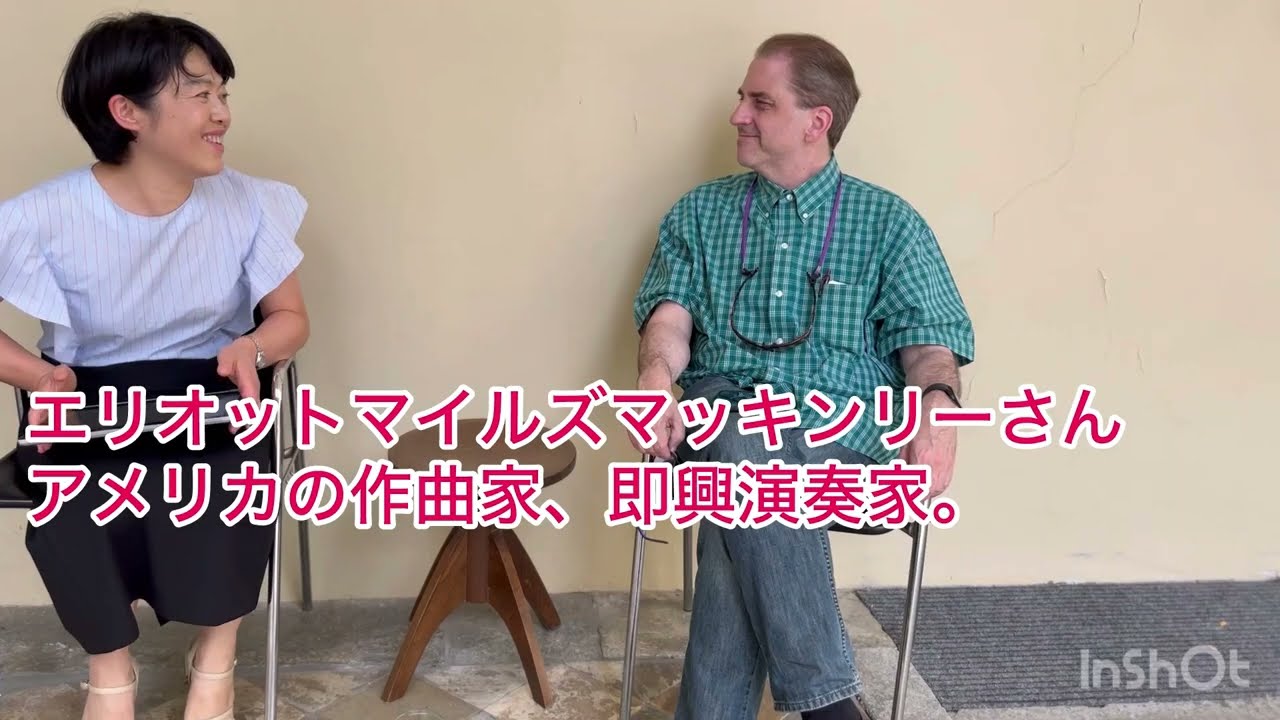
エリオット マイルズ マッキンリー
Elliott Miles McKinley’s
ウィキペディア:
https://en.wikipedia.org/wiki/Elliott_Miles_McKinley
ウェブページ:
https://www.elliottmilesmckinley.com/
ピアニスト土師さおりHajiSaoriのチャンネルへようこそ。
☆Youtubeチャンネルの登録をして頂けたましたら嬉しいです。
メールアドレス:
✉klaviersao@gmail.com
【ピアニスト土師さおりホームページ】
https://saorihaji.wixsite.com/pianomusic
プロフィール
ドイツ国立デトモルト音楽大学へ入学。アルヌルフ・フォン・アルニム教授に師事し首席で卒業。ドイツ国立ロベルトシューマン・デュッセルドルフ音楽大学へ入学。伝説的ブラジル人ピアニスト、ロベルト・シドン教授に師事し国家演奏家資格を取得して卒業。
第3回日本イタリア協会主催コンコルソMusicArteで特別賞を受賞。
american protege internet international competition 2012 に入賞し,2012年にカーネギーホールにてデビュー。第13回大阪国際音楽コンクールG部門にてアブニール賞受賞。第21回IBLA GRAND PRIZE(イタリア)において最優秀賞、併せてラヴェル特別賞を受賞。
2015年より、ピティナ公開録音演奏会に出演し、音源提供を行っている。日本ショパン協会主催パウゼシリーズ出演者オーディションに合格し2016年東京のカワイ表参道パウゼホールにてソロリサイタルを開催(ショパン協会例会)。2017年青柳いづみこ氏とピアノ連弾で共演(カワイ福岡)。カワイ広島にてカワイ主催ピアノリサイタル出演。2017年バンコクで開催されたタイ国際ショパンピアノコンクールの審査員に招かれる。バンコクで演奏会、マスタークラスを開催し好評を博す。2019年島村楽器主催プレミアムレッスンを開催し好評を博す。
2018年、南麻布セントレホール(東京)のコンサートを皮切りに、宗次ホール(名古屋)、スタインウェイ&サンズ神戸、大分ホルトホール主催で国際的フルーティストで琵琶湖国際フルートコンクール審査員のジュゼッペ・ノヴァ氏と共演、関西ベートーヴェン協会例会など多くの演奏会に出演。現代音楽作品の演奏にも力を注いでおり、2018年9月に、親交のあるNimrod Borensteinは土師さおりのために書いたアルペジオのエチュード作品66-4の世界初演を行った。現代作曲家の作品を積極的に演奏会でとり上げ好評を博す。Borenstein氏はヴィラディーミル アシュケナージ氏がサポートする作曲家であり、アシュケナージ氏が指揮をしたCDが発売されている。
第4回Evmelia International Music Festival(ギリシャ)、アルバ音楽祭(イタリア)に招待を受け演奏会に出演。別府アルゲリッチ音楽祭新人演奏会、その他国際音楽祭に出演。オーケストラと協奏曲のソリストとして共演他、ソロ、室内楽、伴奏と、国内外において多岐に渡り演奏活動を行っている。コウベレックスより2枚のアルバム「水の戯れ」「謝肉祭、ベルガマスク組曲、ブルクミュラー25の練習曲」をリリース。FM大阪「くらこれ」にも出演。2021年~2022年カワイ協力の元、カワイ梅田にてオールラヴェルプログラムのラヴェルシリーズを開催。指揮者西本智実氏、女優佐久間良子氏のトークショーに出演。ヤマハと共同で行われた静岡清水文化会館大ホールにて開催の西本智実芸術監督・指揮「マリナートが森になる」に出演。2024年カワイヨーロッパにてソロリサイタルを開催。
Youtube、SNSを通じて様々な動画配信を行っている。大阪音楽大学付属音楽院講師。
Profile.
Graduated from Musashino Academia Musicae. Completed graduate studies at Musashino Academia Musicae.
Entered the Detmold University of Music in Germany. Studied under Professor Arnulf von Arnim and graduated at the top of the school.
Entered the Robert Schumann University of Music and Performing Arts Dusseldorf, Germany. Studied under legendary Brazilian pianist, Prof. Roberto Szidon, and graduated with a National Performer Certificate.
He received a special prize at the 3rd Concorso MusicArte organized by the Italian Society of Japan.
She won a prize at the american protege internet international competition 2012 and made her debut at Carnegie Hall in 2012. She won the Abneille Prize at the 13th Osaka International Music Competition in G category. She won the Grand Prize at the 21st IBLA GRAND PRIZE (Italy) and the Ravel Special Prize.
Since 2015, she has been performing and providing sound sources for PTNA public recording concerts. In 2016, she gave a solo recital at Kawai Omotesando Pause Hall in Tokyo (Chopin Society Meeting) after passing the audition for the Pause Series sponsored by the Chopin Society of Japan. 2017, she performed with Izumiko Aoyagi in a piano duet (Kawai Fukuoka). Performed piano recital organized by Kawai at Kawai Hiroshima. 2017 Invited to be a jury member of Thai International Chopin Piano Competition in Bangkok. Performed concerts and master classes in Bangkok to great acclaim; held premium lessons sponsored by Shimamura Gakki in 2019 to great acclaim.
In 2018, starting with a concert at Minami-Azabu Sentre Hall (Tokyo), she performed at Soji Hall (Nagoya), Steinway & Sons Kobe, with Giuseppe Nova, international flutist and judge of the Lake Biwa International Flute Competition, hosted by Oita Holt Hall, and many other concerts including regular meetings of the Kansai Beethoven Society. He has also appeared in many concerts, including regular meetings of the Beethoven Society of Kansai. He is also committed to performing contemporary music works, and in September 2018, his close friend Nimrod Borenstein gave the world premiere of his Arpeggio Etude Op. 66-4 written for Saori Doji. Mr. Borenstein is supported by Vladimir Ashkenazy, and a CD conducted by Mr. Ashkenazy has been released.
He was invited to perform at the 4th Evmelia International Music Festival (Greece) and the Alba Music Festival (Italy). She has appeared at the Beppu Argerich Music Festival for Newcomers and other international music festivals. She has performed as a soloist in concertos with orchestras, as well as solo, chamber music, and accompaniment in a wide variety of performances in Japan and abroad. She has released two albums from Koberecs: 「Jeux d’eau」「Carnaval, Bergamasque Suite, and Burgmüller 25 Etudes」.
She has appeared on FM Osaka’s “Kurakore.” In 2021-2022, in cooperation with Kawai, she will present an all-Ravel program, Ravel Series, at Kawai Umeda. She performed on a talk show with conductor Tomomi Nishimoto and actress Yoshiko Sakuma. Performed in “Marinato Becomes a Forest”, Artistic Director and Conductor Tomomi Nishimoto at the Main Hall of Shizuoka Shimizu Bunka Kaikan in collaboration with Yamaha.
2024 Solo recital at Kawai Europe.She has been distributing various videos through Youtube and SNS.Lecturer at the Osaka College of Music.
#作曲 #即興 #ピアノ
[Music] [Music] and for [Music] [Music] yeah you know um the the the the process of being a composer um is is is part craft like learning you’re it’s like learning a a language you know you learn the alphabet and you put things together and um so so there’s some of this that that this craft aspect that goes into composing a piece of music and uh so the eigor Stravinsky uh famously said that um um that one does not uh compose music One constructs music much like you would build say a building yeah um but as far as like uh do does music come to me from some imagin space yeah uh this is very interesting interesting question yeah um you know I I would say that the initial ideas do come from I I wouldn’t say it was Divine but there clearly there’s some perhaps other reason why music May populate the imagination but once the idea some idea is um is Gras grabbed from somewhere okay yeah then the work Begins the work is the building the and um learn learning with more about that idea in some ways composing is as much about Discovery so about exploring yeah where the composer uh I like to think that the composer knows the whole piece even if the composer isn’t aware uhhuh so the so the composer than um shines a light and finds the music as as and and reveals the whole structure and and mo much of that is the craft like stabinsky said it’s like a construct construction um I don’t know where the initial ideas come from if it’s the universe or you know if if one if one is religious maybe a God or gods or something like this um but um for me there is there is no day that goes by that I do not think about music in some way and that uh some um ideas that I never thought of before come to my mind so it’s always like a new thing okay yeah see it it’s very interes and what is what it told me um I think so of course we pianist and should have many experience mhm but the composer uh should have so many experience from around the world do you understand and so and you should listen so many kind of fork Fork music and everything yeah you you so composer must have gather many music yes this is very important so then and something come to you and you need to imagine it comes yes yes and building so the building yeah I think so I to your to your uh point is 95% of being a composer is listening yes okay the other 5% is all the other stuff okay okay thank you and compose is something different yeah and this is an excellent thing it it um to speak about is that as a composer um I’m always improvising oh so and and and and um so I I’m not much of a Pianist you’re a much better pianist than I am but uh I will go to the piano and I will impr yeah so I will also improvise in my head uhhuh so the improvisation in my head and then the improvisation sort of through the the keyboard they sort of work uh together oh and um and that’s a lot of times that like uh ideas come about through improvisation oh and the there was a uh really great wonderful jazz pianist Bill Evans who um said that improvisation was composing in real time oh so you for every one second of time there was one second of music okay where whereas the composer slows the process so that for every one second of Music perhaps there’s an hour’s worth of thinking or working uh so I don’t see much of the difference between improvisation and composition uh I see it as being um absolutely linked um and I honestly I think most uh people tend to think that improvisation lies strictly within the domain of say jazz or something of this nature uh but I all musicians have an ability to improvise okay uh I think that in the classical world yeah the for performance practice Yeah it’s not encouraged because you’re so busy interpreting and working on the interpretation of the already written music yeah that where where do you find the space yeah to put your own uh you know your own self into it unless of course you’re talking about opportunities in say Baroque music where you may do some improvisation with the ornamentation or um maybe a cadenza in a conero that you may decide to you could improvise you know if you if you wish um I I I think that the um the separation between improvisation and performance is um is more artificial in the in education in pedagogy okay it should be more improve together okay yeah I I I think so um so sometime so pianist just only pianist must and we a score play so chamber music they they look at score yeah so but we we play with a score normally yeah so and then sometime I feel training so just training so with a schore but um re recent recent now I don’t think so sometime I okay I improve improve yeah if I forget some something yeah you you know the feeling you can make some so and so if I think so then then it is more better to feel on the stage yeah yeah yeah absolutely absolutely it’s important so so